What have you done to your square lately??

Disclaimer: Links on this page pointing to Amazon, eBay and other sites may include affiliate code. If you click them and make a purchase, we may earn a small commission.

Ricko1966

Full Access Member
Joined
Apr 11, 2017
Posts
9,940
Reaction score
19,066
Location
kansas
First Name
Rick
Truck Year
1975
Truck Model
c20
Engine Size
350
I have noticed many of those "restricted" nipples over the years, but never put 2 and 2 together. I always just assumed that the nipple was a thick casting for some manufacturing reason.

My ignorant self has replaced them several times with more open fittings and never noticed a difference in heater performance. Maybe it doesn't matter so much, or maybe I'm just ignorant... it could be either, lol.
Or lucky. They restricted the flow to prevent heater core failures. We had one guy on here that his suburban wasn't warming up fast enough on the gauge. He said once he put the correct fitting in his problem was cured the heater core was bypassing too much coolant. I've only heard that once.
 
Last edited:

Grit dog

Full Access Member
Joined
May 18, 2020
Posts
9,429
Reaction score
17,285
Location
The Right side of Washington
First Name
Todd
Truck Year
1986, 1977
Truck Model
K20, C10
Engine Size
454, 350
I have noticed many of those "restricted" nipples over the years, but never put 2 and 2 together. I always just assumed that the nipple was a thick casting for some manufacturing reason.

My ignorant self has replaced them several times with more open fittings and never noticed a difference in heater performance. Maybe it doesn't matter so much, or maybe I'm just ignorant... it could be either, lol.
Same.
Makes total sense but if I had to guess it may be for quicker warmup and the Heater doesn’t need full flow to pull good heat.
I do know a heater core and fan will pull a lot of heat off.
Used to cheat in demo derby and keep coolant in the system (rules were water only because 90% of cars would loose their coolant getting smashed.
I’d hook the upper and lower rad hose together and leave the heater cranked on high temp and fan. It was enough to keep the engine alive and you could go around smashing cars with the front of f your car without busting the radiator!

Edit. Dint read Rick’s last post before posting
 

Tank6x2

You’re Awesome Know That!
Lifetime Supporting Member
Joined
Mar 27, 2017
Posts
1,259
Reaction score
1,878
Location
Edmonton Alberta Canada
First Name
Kurt
Truck Year
79/86
Truck Model
C30
Engine Size
350, TH400.4:10 gears 2WD
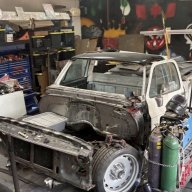
Spending the weekend on mounting the new fuel tank /rear crossmember, ordering more insignificant/random don’t need now need later parts, Merry Christmas to all next week!
 

Attachments

  • image.jpg
    image.jpg
    147.2 KB · Views: 32
  • image.jpg
    image.jpg
    139.4 KB · Views: 31

gilby959798

Full Access Member
Joined
Sep 12, 2022
Posts
406
Reaction score
2,107
Location
CLT NC
First Name
John
Truck Year
1977
Truck Model
GMC K25 Camper Special
Engine Size
350
You must be registered for see images attach


Working on the rust repair little by little
 

Blue Ox

Turning Diesel Fuel Into Fun
Joined
Mar 27, 2018
Posts
5,874
Reaction score
14,629
Location
LI-NY
First Name
Derek
Truck Year
MCMLXXXV
Truck Model
K20HD
Engine Size
6.2L
Or lucky. They restricted the flow to prevent heater core failures. We had one guy on here that his suburban wasn't warming up fast enough on the gauge. He said once he put the correct fitting in his problem was cured the heater core was bypassing too much coolant. I've only heard that once.

Extra bypass may be another effect, but they're usually made with a restriction because heater cores can moan during acceleration if they're not flow restricted.
 

Terlingueno

Fictional Western Sage
Joined
Dec 29, 2020
Posts
443
Reaction score
1,580
Location
Far West Texas
First Name
Skeeter
Truck Year
1985
Truck Model
K20 Suburban-SM465
Engine Size
350
Or lucky. They restricted the flow to prevent heater core failures. We had one guy on here that his suburban wasn't warming up fast enough on the gauge. He said once he put the correct fitting in his problem was cured the heater core was bypassing too much coolant. I've only heard that once.
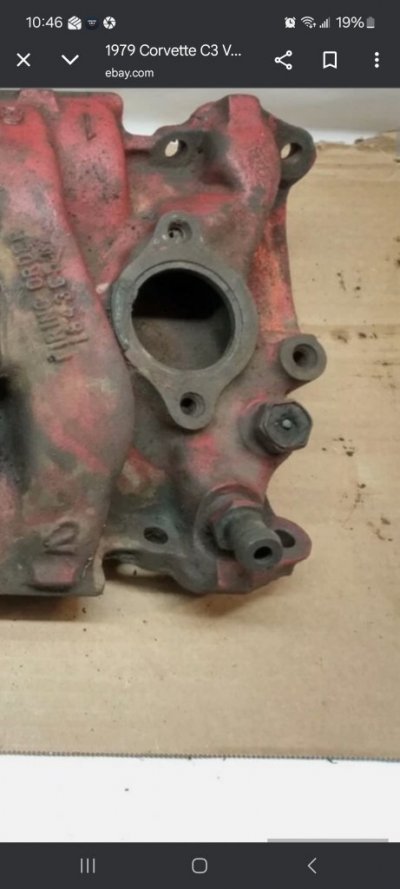
What does one of these "restricted" units look like?
 

Terlingueno

Fictional Western Sage
Joined
Dec 29, 2020
Posts
443
Reaction score
1,580
Location
Far West Texas
First Name
Skeeter
Truck Year
1985
Truck Model
K20 Suburban-SM465
Engine Size
350
Bottom right corner of the manifold
Were they only on Corvettes? I am using the OEM unit off the original manifold on my Edelbrock and I don't think the hole is that small in diameter.
 

Ricko1966

Full Access Member
Joined
Apr 11, 2017
Posts
9,940
Reaction score
19,066
Location
kansas
First Name
Rick
Truck Year
1975
Truck Model
c20
Engine Size
350
Were they only on Corvettes? I am using the OEM unit off the original manifold on my Edelbrock and I don't think the hole is that small in diameter.
No it wasn't just on Corvettes. I don't have a definitive list as to whether every small block Chevy made had one but even the smog dog 71 307 that I checked for @PrairieDrifter had one.
 

Old Guy Bill

Supporting Member
Supporting Member
Joined
Sep 10, 2023
Posts
981
Reaction score
2,957
Location
KY
First Name
Bill
Truck Year
1978
Truck Model
K20
Engine Size
400
Almost every heater hose system in that era had two hose sizes, 5/8" on the
restricted (outgoing) and 3/4" on the input side of the core.
 

Terlingueno

Fictional Western Sage
Joined
Dec 29, 2020
Posts
443
Reaction score
1,580
Location
Far West Texas
First Name
Skeeter
Truck Year
1985
Truck Model
K20 Suburban-SM465
Engine Size
350
Almost every heater hose system in that era had two hose sizes, 5/8" on the
restricted (outgoing) and 3/4" on the input side of the core.
Mine is 5/8" from intake to core, 3/4" from core to radiator. The ID of the unit in Ricko's pic looks smaller than the ID of the one on my truck. Perhaps my eyes/memory is fiddlin wid my perception
 

PrairieDrifter

Full Access Member
Joined
Dec 28, 2014
Posts
4,730
Reaction score
8,011
Location
North Dakota
First Name
Mason
Truck Year
84,79,77,76,70,48
Truck Model
Suburban k10, bonanza k10, k30, k20, c10, gmc 1/2ton
Engine Size
350, 350, 350, 350, 350, 350
I have noticed many of those "restricted" nipples over the years, but never put 2 and 2 together. I always just assumed that the nipple was a thick casting for some manufacturing reason.

My ignorant self has replaced them several times with more open fittings and never noticed a difference in heater performance. Maybe it doesn't matter so much, or maybe I'm just ignorant... it could be either, lol.
I've done the exact same thing. We're the smart ones ya know :rofl:

"nEeDS MOrE fLOw" :laughing1::laughing1::laughing1:

****** hilarious lololol
 

xm20k

Runs on 93 octane, caffeine, and spite
Supporting Member
Joined
May 26, 2025
Posts
1,109
Reaction score
2,847
Location
Girard, Ohio
First Name
David
Truck Year
78
Truck Model
c10
Engine Size
388
Almost every heater hose system in that era had two hose sizes, 5/8" on the
restricted (outgoing) and 3/4" on the input side of the core.
You have that backwards 5/8 feeds the core and 3/4 is the out flow. The different hose sizes are to maintain an optimal pressure differential as the fluid expands into the larger space of the core it also reduces back pressure and slows down allowing for more contact time to transfer heat.

Gm used to use 5/8 for both untill the late 50s. The inlet is almost always on the lower side to prevent noise from air flowing into the core and causing a gurgling or burbling noise.
 

Forum statistics

Threads
48,401
Posts
1,066,554
Members
42,778
Latest member
Skippy
Top