
Overheating Rebuilt 350

Disclaimer: Links on this page pointing to Amazon, eBay and other sites may include affiliate code. If you click them and make a purchase, we may earn a small commission.

KDizzle

Junior Member
Joined
Aug 18, 2024
Posts
25
Reaction score
25
Location
Middle Ga
First Name
Kevin
Truck Year
1986
Truck Model
K5
Engine Size
350
Also... I went back to your first post and looked at the water pump you ordered. That water pump says it is a STANDARD rotation pump. If you go to 1992 instead, the C3500 only has that same pump listed as a GM option and it also states STANDARD rotation. When you go to a C1500, you have that as an option, but also have GM 252719, which says it is both taller and REVERSE rotation.
It appears you found the culprit…me, ordering a standard flow water pump. It most likely is a coolant flow issue based on whats happening and your keep observation. Much appreciated for catching that and suggestions on purchasing options. I’ll see what my options are between Local, Summit and RockAuto. Once I get the right parts and get it buttoned back up. I’ll give it another go and post results.

Really thankful for all the knowledge and experience on this forum.

Ricko1966, your original suspicions were correct!
 
Last edited:
KDizzle

Junior Member
Joined
Aug 18, 2024
Posts
25
Reaction score
25
Location
Middle Ga
First Name
Kevin
Truck Year
1986
Truck Model
K5
Engine Size
350
Update:
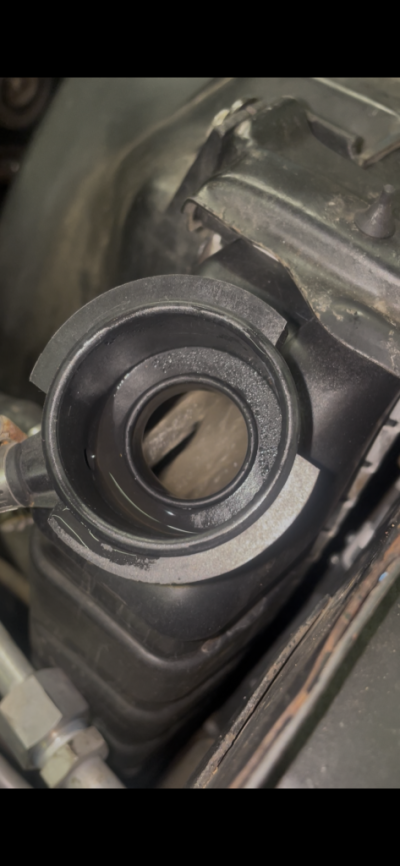
New reverse water pump, reverse fan clutch and reverse fan installed. With front end lifted; using water; no thermostat; upper fan shroud installed and a fan blowing air in the front of radiator, I was still dealing with overheating, however, not as quick. Was able to finish break in. Motor sounds great. Now at idle, still dealing with running hot. Left radiator cap off during idle and tried to burp air out of coolant system as best I can while adding more water. Temp gauge still slowly climbs. After about 15 mins idling, I cut it off at a temp of about 230 (according to gauge). I’m guessing I need a temp gun to verify temp and then regroup.

Will using water instead of coolant and not having a thermostat installed contribute to running hot? I plan to drain and replace water with coolant, but only after I get it running at a decent temp.

Water circulation seems much better.
 

Attachments

  • IMG_0973.png
    IMG_0973.png
    522.5 KB · Views: 3
Last edited:
Joined
Jul 20, 2021
Posts
954
Reaction score
3,483
Location
Tennessee
First Name
Matt
Truck Year
1979
Truck Model
C10
Engine Size
6.17775926 liters, 3L80, 228.6mm axle
Verify that the timing isnt retarded. Anywhere around 10 initial or so would be a good starting point.
 

Bextreme04

Supporting Member
Supporting Member Army
Joined
May 13, 2019
Posts
4,842
Reaction score
6,566
Location
Oregon
First Name
Eric
Truck Year
1980
Truck Model
K25
Engine Size
350-4bbl
Update:
New reverse water pump, reverse fan clutch and reverse fan installed. With front end lifted; using water; no thermostat; upper fan shroud installed and a fan blowing air in the front of radiator, I was still dealing with overheating, however, not as quick. Was able to finish break in. Motor sounds great. Now at idle, still dealing with running hot. Left radiator cap off during idle and tried to burp air out of coolant system as best I can while adding more water. Temp gauge still slowly climbs. After about 15 mins idling, I cut it off at a temp of about 230 (according to gauge). I’m guessing I need a temp gun to verify temp and then regroup.

Will using water instead of coolant and not having a thermostat installed contribute to running hot? I plant to drain and replace water with coolant, but only after I get it running at a decent temp.

Water circulation seems much better.
230 isn't bad and yes, running just straight water at idle can be a problem. Water will boil at 212 degrees at sea level and atmospheric pressure. Every 500ft of elevation above that drops the boiling point of water by 1 degree. Allowing the system to pressurize to the standard 12-16PSI of most systems would raise the boiling point of pure water to 257 degrees F. Mixing 50-50 coolant/water will increase heat transfer and also raise the unpressurized boiling point to 223 degrees, which also brings the pressurized boiling point to 260+ degrees. The reason this matters is that when the coolant goes through it's phase change, it expands greatly and will push out the extra coolant from the system. It also creates little pockets of higher pressure and higher temperatures that will have significantly worse heat transfer properties. The steam will not absorb heat from the engine as well and it will not dump it out of the radiator as well either(if it makes it there).

This is why I will usually test run engines with no thermostat and the heater hose outlet dumping on the ground and the heater hose inlet connected to a garden hose running on full bore. This makes sure colder water is always cycling through the system and it won't overheat during break-in. Then I will run it a bit longer while letting the hose pull distilled water from a jug for about 2-3 gallons to purge the tap water out. Then I shut it off and let it all cool, check torques, etc... Then I will put a thermostat back in, connect the whole system and make sure I have it all topped off and a radiator cap on it before firing it up and letting it run normally to make sure it will come up to temp and thermostat will open and not overheat while also not leaking. Once all that is done, I drain the system again and then fill back up with 50-50 coolant-distilled water and I'm done.
 

Bextreme04

Supporting Member
Supporting Member Army
Joined
May 13, 2019
Posts
4,842
Reaction score
6,566
Location
Oregon
First Name
Eric
Truck Year
1980
Truck Model
K25
Engine Size
350-4bbl
Rust also has a good point. Now is the time to check idle mixture and timing. If you are too rich or too lean it will overheat. If you have too much or too little base timing it can also overheat.
 

Latest posts

Forum statistics

Threads
48,508
Posts
1,069,809
Members
42,990
Latest member
buster44
Top