Meanwhile, ignorance and stupidity yet abound. Houses and such are safer, but a one-size-fits-all is not the ideal solution.
For example:
(1) Public agents not competent to make such decisions wanted to tax us just for having pickups and trucks, all under the guise of saving the planet.
Meanwhile, there are many of us out there more interested in dependability and mileage than hot-rodding. We took lessons from the big trucks - more gears with lower gears, to allow relatively small engines to move big loads, but still get good mileage when opportunity prevailed.
Too, to the end of having an efficient rig, we did not add all the things public agents wanted, but that resulted in the engines tuned in such a way their mileage and performance stunk, compared to what a given engine could have done.
My little 250 inline 6 with 6 gears in the 3spd tranny (from a 62 wagon with an overdrive) was able to pull the steep slope of the mountain pass pulling my loaded camp trailer in 3rd under.
At that time, Ford had a 460, which was so detuned for emissions it, with the Detroit choices for transmissions (it was just hauling a cab-over camper), could not keep up with my loaded 6 cylinder truck and trailer on a steep climb, and which did regular 22mpg on the open road.
Then there are the complications that make it impossible to do your own maintenance (plug changes, troubleshooting electronics, etc.).
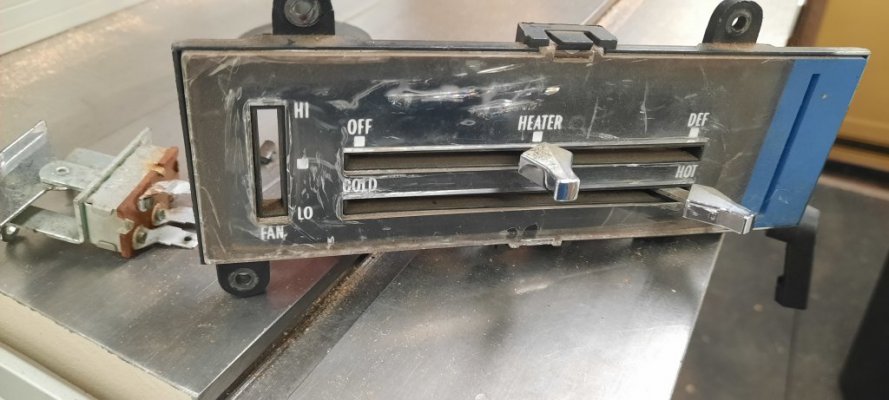
On these later cars and trucks, relays are more about minor cost savings on builds than about efficiency or dependability. Many relays are used to save wire, rather than to take a load off a switch.
(2) Septic systems. Helped a fellow with legal problems, because he used a common, proven, Canadian version of a septic system, rather than one of the locally approved ones. It was a short battle, but a battle nonetheless, before the county wrote him to tell him to move back on his property and, please, quit coming after them [for their many blunders and acts done contrary to law].
(3) Electrical. Codes only require minimums. This has resulted in folks with shops and who relied on licensed electricians to tell them what they needed wiring outlets for 14 gauge wire, limiting what could be put on the circuit, compared to standard 12 gauge wire. In the end, the finished shop had to have conduit added so the owner could use equipment.
Even on that, it's frustratingly comical to consider conversations and claims about electrical supplies. In the end, it's ALL about heat. So just saying the panel can handle, for example, 200 amps is VERY misleading.
Aside the fact 240 circuits eat 2 slots, I could run two overhead heaters that eat 30 amps, my 2 big dust collectors that, each, eat 15 amps, one of the bandsaws (also 15 amps) and the cabinet saw (10) amps , toss in a battery charger, a weed eater, Christmas lights, radio, a freezer and a freeze dryer. . . .
(3) In the end and when talking about government, it needs to be remembered, we are talking about people. Many of whom graduated at the bottom of their classes and/or who had to take tests more than once to pass (e.g., I knew a guy who took the Mensa Society test, didn't make it, so went home and studied, took it again and passed, so, with tongue way in cheek, was able to claim he was, now, a genius.
(4) Law. The U.S. Supreme Court just put a certain crowd into a tizzy by overruling itself. That is, rightfully, recognizing it erred when it presumed to have authority nowhere granted it.
This is not to say all agents do is wrong, but it is to say there is very good reason we have not just one, but, instead, have fifty-one constitutions. That reason is, agents are not always our friends. The fact which is borne out in simple review of the thousands of case files kept by our courts, and in which agents were declared incompetent, or corrupt for all the same reasons the common man is also declared those things.