(1) I used to by epoxy by the five gallon bucket (five part A, five part B). Even by the five, it was expensive.
Add to the forgoing, most epoxies are formulated for relatively thin pours of about 1/8". More than that and you'll see smoke rolling off the pour. Formulas that tolerate thicker pours are going to be the higher priced ones.
To pour around a socket would be doable, but tough. Though epoxy is thicker than poly, water and so on, it'll still seep at every opportunity. The bottoms of each socket would have to be well sealed. Then you'd have to deal with the resin locking into what you used to seal the bottoms.
Finally, there is that you'd have to wrap each socket in something the epoxy didn't want to become close friends with.
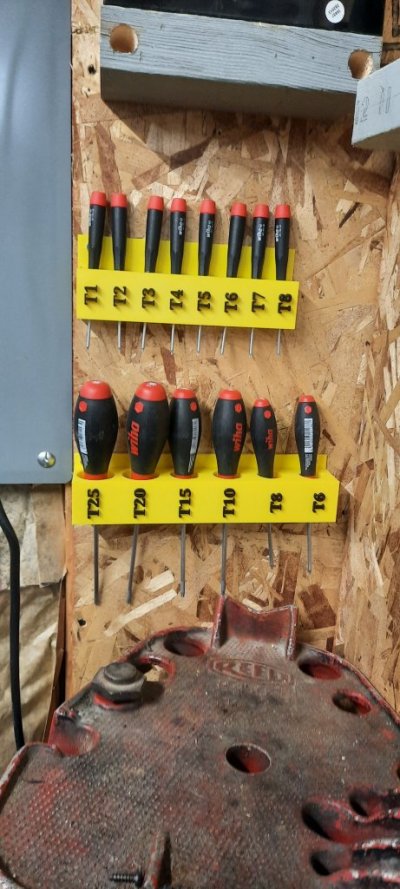
(2) Now that I have a printer, I can say you might be best served going down that road.
One thing I've learned in the short time of using my printer is, planning lettering to limit how many times the printer has to swap filaments [if you don't have a nice unit with two or more hotends]. For that reason, When I can and the aesthetics allow, use lettering and numbering as an add on, so the machine only has to switch once. That vastly speeds up production.
As an example, one of the nice looking ones showed socket sizes on the angled side, so once the print hit the lettering, it would have to swap filaments on every pass, until the lettering was complete.
The nice thing about many of the ones available is, with some fiddling, some can be enlarged or reduced without affecting holes sizes
If you found a method other than 3-D prints, you could still have numbers printed and attach them to whatever method you resorted to.
(3) Long ago, and because I can, I figured out many of the things I want can be made from wood or other material workable with standard woodworking tools (saws, router. . . ).
Once sealed, heavy density fiber board can be sprayed with automotive paint and will look like the fender of that nicely painted hupmobile.
(4) Other materials workable with woodworking tools include Corian type products and plexi products, the latter which can be welded together to make thicker pieces using certain solvents and weights.
(5) On workable materials, you might be able to drill oversized holes in specific ranges, then install inserts that take up the slack in each. That could be tubes or the equivalent of cut to size match sticks (say one vertical every 120-degrees or less).
Finally, you are going to make at least five socket holes for 10mm, right?




 onreva.com