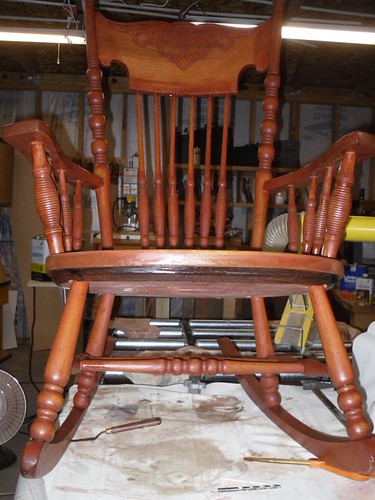
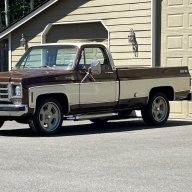
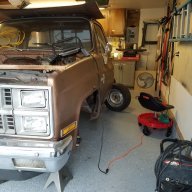
You might say I do and have done a bit of woodwork. Clues of a little of what I have done can be seen in the links below. Some of the items are from over fifty years ago.
To get the best performance out of your finished product, you have to start with the wood you chose. Than means not only choosing durable wood, like white oak, but insuring you start out with it being at a good level of moisture content.
Generally, most hardwood you buy is going to be in a ballpark of the moisture content you are shooting for. Say, around 8%.
Then comes the matter of keeping it around there (8%).
Dealing with trying to keep wood in good shape, whether indoors or outdoors, consumed a lot of my time.
In the end, and abuse aside, you are dealing with problems from moisture gains and losses.
As wood loses moisture, it shrinks. That causes it to crack and split.
Going the opposite way, if wood gains moisture, it swells. That can blow joints apart and it WILL cause surface coats to separate from the wood.
The foregoing is why moving a piece of furniture from, for example, Death Valley to the Pacific Northwet, or visa versa, can be a problem.
ONE of the reasons it is often a problem for furniture is, builders save money by focusing just on the outside of the piece of furniture. Look at your average chest-of-drawers and you'll notice the inside and drawers are unfinished.
If all the insides were finished, it would slow down the gain and loss of moisture, which would reduce the chance of damage to the wood by sudden moisture content changes.
Mindful of the foregoing, it will pay to treat the sides, edges and ends of each piece of wood, with a great deal of focus on the ends, which gain and lose moisture the quickest.
Stain is a surface coat, though it will fill the grain pores. It holds up to UV better than do dyes, which penetrate, and tend to show the grain more.
The average stain is oil based. That oil is a hardening oil (e.g., linseed or tung oil that have been polymerized) to perform their task. After hardening (they react with oxygen), finish is fair game. Millions of gallons of polyurethane and other finishes have been applied over stains.
Generally, heavy bodies oils, like those used for house paining, will hide much of the grain.
I prefer the oil based stains. In part, because they are more forgiving of lap marks (going back over what you did a board or two back, and causing the overlaps to be heavy on the stain, compared to other spots).
I whittled my stain collection down from about 40 quarts to around twenty or so. Not one of the cans bragged/brags about being for exterior. Most that heavy lifting [against UV damage (fading) is done by the finish.
Before getting into any other details on finishes, be aware satin finishes suck. That is, were you to apply enough coats, you would not be able to see the wood or grain, because the satin effect is achieved by floating things in the finish. For that reason, if I want a satin finish, I use gloss, then, when the finish is fully hard, I buff it with 0000 (four ought) steel wool to take the sheen off.
The specialty finishes used on newer flooring are impressive. I've subcontracted to have maple floors finished with them installed, but have not, otherwise, used them, so I don't know how they'd hold up to the elements and UV. I do know they are impressive INDOORS.
I have done a lot of square feet of oak floors with poly. The poly used for those projects are called short oil finishes, which is just a way of saying, less polymerized hardening oil is used in the formulation. That is because short oil finishes are harder, so stand up to foot traffic better.
On the other hand, there are the long oil finishes. By adding more hardening oil, they are not as hard as the short oil finishes. The advantage of that is, they are more flexible, so shift with changes in the wood better than the short oil finishes. That is why nautical finishes use long oil finishes.
Keep in mind, that durable finish for wood floors doesn't suffer the elements. They are less likely to be exposed to major shifts in humidity because of things like HVAC and such.
Every floor I refinished got a unique finish in that I would thin the poly about 15% to 20% then flood the floor with it. That caused the thinned poly to saturate sides and much of the back, as well as the ends.
I kept working the poly so areas that sucked it up got re-covered with more. And, by working the poly, it had less ability to react with the oxygen in the air.
The longer the finish was worked, the more time it had to soak in, rather than just being a surface coat, which is what 99% of the finishes out there are. The deeper the finish penetrate, the better at sealing the wood against moisture gain and loss.
ON A SIDE NOTE: I use non-hardening oils on butcher blocks and kitchen utensils. Years back, I bought an end grain butcher block on the cheap. It was cheap because it had been neglected, resulting in extreme drying, which caused cracking, splitting and separations of some of the joinery.
I flooded the butcher block with thinned mineral oil, and kept adding to it where ever oil soaked in. I worked the oil in over a couple hours, then set a can of oil near it and would add more as I walked by going to and from other projects. After a day or two, I left it alone and forgot about it. A few weeks later, I checked it out and was surprised to see the oil, in replacing the lost moisture, swelled the wood, making all the cracks, splits and separations to seem to have disappeared.
Explore Kelly Craig’s 173 photos on Flickr!

www.flickr.com

www.instructables.com








 .
.