
JBF43
Junior Member
- Joined
- Jul 26, 2026
- Posts
- 3
- Reaction score
- 0
- Location
- FL
- First Name
- Jim
- Truck Year
- 1976
- Truck Model
- C60
- Engine Size
- 350
Hi,
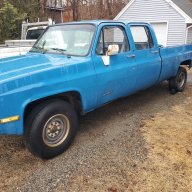
New member here with a question about brake fluid on a 1976 Chevy C60. As mentioned, the truck is a 76 Chevy C60 with a 350 engine, a 4-speed manual tranny, and a 2-speed rear end. Brakes-wise, it has the single well master cylinder under the hood with the brake booster mounted under the floor of the cab. The truck is rarely used to haul a tractor on either a 16-foot car hauler or sometimes a 24-foot deck-over goose-neck trailer. Other than that, it just sits in the yard, and I run it a couple of times a week to keep the battery up and keep gas in the carb. It's not your everyday grocery getter. I bought it back in 2017 after seeing it for sale online. When I looked at it, the brakes weren't working. It started right up and purred like a kitten. No smoke, no strange noises or anything like that. Just no brakes. I did talk the owner into installing a new master cylinder, and he did that. So then it had pedal pressure, but you needed 3 full-grown men and a small boy to stomp the pedal to make the brakes work. At least I was able to get it home. I found out that the brake booster under the floor needed replacing and was able to get one through my local NAPA store for about $300 or so. Installed it, bled it, and had great working brakes. HOWEVER, after not all that long doing regular fluid checks before driving, etc, I noticed that the master cylinder was empty or almost bone dry. Refilled it and checked the entire brake system for leaks but didn't find any wet spots anywhere. Since then, I check the brake fluid every other time I start the truck, even with it just sitting here in the yard and not being driven. Over the course of between 2 to 4 weeks, it will need fluid again. Still no visible leaks. This has gone on for as long as I have had the truck. I have also had to replace the booster 3 times since owning the truck from 2017. The first and second boosters I replaced were the single-cylinder type, and the last one was the double-cylinder type. Pictures attached. The last one went out while driving. The brake pedal got very hard again. I had the tractor on the trailer when it happened and was able to creep home in low gear using the trailer brakes to stop the truck. Luckily, on all level ground all the way home. This time, only the double-cylinder type was available. Interestingly, I thought maybe a double-cylinder vacuum booster would increase the braking performance, but it didn't make any noticeable difference at all.
ANYWAY, now that I have bored you to death with this story, I am wondering where this disappearing brake fluid is going since it is not coming out on the ground anywhere. My best guess is that it is going into the brake booster and somehow possibly collecting in the vacuum chamber somewhere until it can't hold any more, and then the bad booster problem recurs. Any thoughts or ideas on this problem would be greatly appreciated.
New member here with a question about brake fluid on a 1976 Chevy C60. As mentioned, the truck is a 76 Chevy C60 with a 350 engine, a 4-speed manual tranny, and a 2-speed rear end. Brakes-wise, it has the single well master cylinder under the hood with the brake booster mounted under the floor of the cab. The truck is rarely used to haul a tractor on either a 16-foot car hauler or sometimes a 24-foot deck-over goose-neck trailer. Other than that, it just sits in the yard, and I run it a couple of times a week to keep the battery up and keep gas in the carb. It's not your everyday grocery getter. I bought it back in 2017 after seeing it for sale online. When I looked at it, the brakes weren't working. It started right up and purred like a kitten. No smoke, no strange noises or anything like that. Just no brakes. I did talk the owner into installing a new master cylinder, and he did that. So then it had pedal pressure, but you needed 3 full-grown men and a small boy to stomp the pedal to make the brakes work. At least I was able to get it home. I found out that the brake booster under the floor needed replacing and was able to get one through my local NAPA store for about $300 or so. Installed it, bled it, and had great working brakes. HOWEVER, after not all that long doing regular fluid checks before driving, etc, I noticed that the master cylinder was empty or almost bone dry. Refilled it and checked the entire brake system for leaks but didn't find any wet spots anywhere. Since then, I check the brake fluid every other time I start the truck, even with it just sitting here in the yard and not being driven. Over the course of between 2 to 4 weeks, it will need fluid again. Still no visible leaks. This has gone on for as long as I have had the truck. I have also had to replace the booster 3 times since owning the truck from 2017. The first and second boosters I replaced were the single-cylinder type, and the last one was the double-cylinder type. Pictures attached. The last one went out while driving. The brake pedal got very hard again. I had the tractor on the trailer when it happened and was able to creep home in low gear using the trailer brakes to stop the truck. Luckily, on all level ground all the way home. This time, only the double-cylinder type was available. Interestingly, I thought maybe a double-cylinder vacuum booster would increase the braking performance, but it didn't make any noticeable difference at all.
ANYWAY, now that I have bored you to death with this story, I am wondering where this disappearing brake fluid is going since it is not coming out on the ground anywhere. My best guess is that it is going into the brake booster and somehow possibly collecting in the vacuum chamber somewhere until it can't hold any more, and then the bad booster problem recurs. Any thoughts or ideas on this problem would be greatly appreciated.
You must be registered for see images attach
You must be registered for see images attach