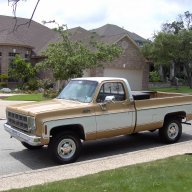
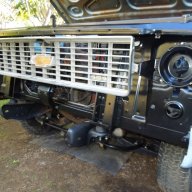
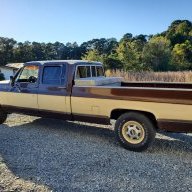
Anyways I’m just hoping that with the new mounts I won’t have a bunch of realigning to do. Thoughts or advice would be great, thanks
Hey there - the first thing you need to do is put new mounts in. You cannot line up any of the hanging panels ( doors, fenders, hood etc. until the cab is correctly mounted. You will need to replace the mounts for the radiator support also, and then line everything up from there. There are a number of threads about this process on the forum that should help you in more detail.
Replacing the floor is a critical job also, that takes you back a step before cab mounts. Obviously the floor is integral to the cab, therefore you will want to make sure that the cab firewall, sills and rear wall are all correctly oriented to the floor, and then that the cab is properly mounted to the frame. If you don't do this, the door openings will be incorrect and you will never gap the panels properly.
Depending on what all you are actually replacing ( complete floor, floor sections, floor support rails, inner / outer sills etc. - you should construct a jig to support the cab before cutting it apart. There may be someone that has a thread on here about floor replacement, others will know.
As far as cab mount material / brands - rubber ( LMC etc. ) is OEM, and should last a similar lifetime in the truck ( another 50 years ). They will also provide the highest level of road noise insulation, due to the flexibility.
Energy Suspension ( and others ) are either cast or injected plastic ( polyurethane ) - stiffer than rubber so noisier. They may also contribute to metal fatigue over time, as more road vibration is transferred into the metal. I have also personally had poly suspension bushings collapse ( turn to mush ) after a "short" ( 5 - 10 years ) period from a combination of oil contact and harsh weather.
You could make your own from turned Nylon pucks ( also stiff, but potentially less likely to degrade over time ), or even solid steel or aluminum.
By bolting the sheet metal directly to the frame you are effectively creating a "unibody" in theory. I have not seen anyone ( outside of racing builds ) do this for the street, and test over a long period of time, however am looking at trying this for a track car project in the future.
Hope some of this helps - post pics in a build thread ...