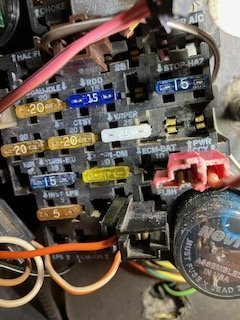
Also... this is NOT a fuse. I have seen these metal auto resetting circuit breakers go bad in such a way that they will show continuity when unplugged, but the second ANY amount of current goes through it, it pops. The way they work is that there is a small strip of metal between two contacts. That piece of metal(it is actually two pieces of metal bonded together) naturally heats up a certain amount in a linear fashion based on the amount of current running through it. The two pieces of metal expand at different rates, which causes the piece of metal to bend when it heats up. It is calibrated to bend enough to break contact with one of the points at a certain amount of current, but it takes a little while to do so if it isn't a dead short. When they get old, the metal can have a bunch of corrosion on it(which increases resistance) or the metal strip can be deformed or damaged, and this can cause the breaker to either not make contact at all or to trip with very small amounts of current load.
All this to say, you need to test the breaker with it installed and also when you push the switch. Put the breaker in part way and check voltage at both pins with it inserted(red probe on the pin, black probe on a good clean ground point). Then check voltage on the right pin while pushing the lock button in both directions. If the voltage drops to 0 when you push the switch, you might have a bad breaker. If that happens, pull the breaker out and repeat the test on the right pin but checking for resistance. You have more than 50 ohms resistance to ground when not pressing the lock switch(it should really read OL). When you press the lock switch in either direction the meter should read the coil resistance on the relay. If that reading is less than 5 Ohms, the relay is bad. Unfortunately... I don't believe that relay is made anymore, so you would probably have to do some wiring changes to switch to modern relays.