Lets talk about a module ignition Replacement

Disclaimer: Links on this page pointing to Amazon, eBay and other sites may include affiliate code. If you click them and make a purchase, we may earn a small commission.

Gpaw44

Full Access Member
Joined
Apr 3, 2016
Posts
51
Reaction score
53
Location
Texas
First Name
Alex
Truck Year
1986
Truck Model
1500
Engine Size
305
I'm thinking of going with an MSD system. I getting about 6 months out of an ignition module in my 86 GMC with a 305 V8 before it just shuts down and I have to have the truck trailered home. What have you replaced the module ignition system with that you have great results with? Thanks in advance
 
Last edited:

Broken85

Supporting Member
Supporting Member
Joined
Jan 14, 2024
Posts
296
Reaction score
408
Location
Cumberland, NJ
First Name
A
Truck Year
1985
Truck Model
K10
Engine Size
350
Check the wiring harness coming out of the distributor for frayed wires. I had. Truck that would burn out pickups once a year. Finally figured out that the frayed wires were grounding and blowing the pickups. Pulling the distributor tower once a year is a pain in the .
 

Ricko1966

Full Access Member
Joined
Apr 11, 2017
Posts
9,955
Reaction score
19,108
Location
kansas
First Name
Rick
Truck Year
1975
Truck Model
c20
Engine Size
350
We discussed all this march of last year. Either you aren't buying Genuine GM modules or Top tier NAPA modules. Or something else is killing the modules. Review what I posted last year about what kills modules. I'll recite what I can off the top of my head. A failing coil kills modules,too much spark plug gap,not using heat sink paste under the module,distributor,engine block,internal distributor grounds insufficient, kills modules, not supplying a clean 12volt power supply to the distributor,without other accessories on that lead. Anything that keeps that module from seeing a full 12 volts at sufficient amperage, whether ground side or hot side creates heat in the module,,,overloading the module with a faulty coil or too large of plug gaps. .035, GM at one point opened them up,then saw they had problems and closed them back up.
 
Last edited:

SquareRoot

Full Access Member
Joined
Mar 18, 2017
Posts
4,501
Reaction score
8,902
Location
Arizona
First Name
Mike
Truck Year
85
Truck Model
K20
Engine Size
350
I'm thinking of going with an MSD system. I getting about 6 months out of an ignition module in my 86 GMC with a 305 V8 before it just shuts down and I have to have the truck trailered home. What have you replaced the module ignition system with that you have great results with? Thanks in advance
You got bigger issues.
 

Terlingueno

Fictional Western Sage
Joined
Dec 29, 2020
Posts
448
Reaction score
1,605
Location
Far West Texas
First Name
Skeeter
Truck Year
1985
Truck Model
K20 Suburban-SM465
Engine Size
350
We discussed all this march of last year. Either you aren't buying Genuine GM modules or Top tier NAPA modules. Or something else is killing the modules. Review what I posted last year about what kills modules. I'll recite what I can other top of my head. A failing coil kills modules,too much spark plug gap,not using heat sink paste under the module,distributor,engine block,internal distributor grounds insufficient, kills modules, not supplying a clean 12volt power supply to the distributor,without other accessories on that lead. Anything that keeps that module from seeing a full 12 volts whether ground side or hot side creates heat in the module,overloading the module with a faulty coil or too large of plug gaps. .035 GM at one point opened them up,then saw they had problems and closed them back up.
Is this the thread?
 

Memaloose

Full Access Member
Joined
Dec 2, 2018
Posts
599
Reaction score
1,803
Location
Bayard, New Mexico
First Name
Tony
Truck Year
1975
Truck Model
K20
Engine Size
350
I always carried at least one extra module in the glove box plus the tools to replace it with and a headlamp. I think it would only take about 10 minutes to replace.
If you're replacing one that often you have a problem. Make sure you have clean mating surfaces and use dielectric "grease", tighten securely.
I haven't had to replace many but I'm always prepared, easy to do.
 

Ricko1966

Full Access Member
Joined
Apr 11, 2017
Posts
9,955
Reaction score
19,108
Location
kansas
First Name
Rick
Truck Year
1975
Truck Model
c20
Engine Size
350
I always carried at least one extra module in the glove box plus the tools to replace it with and a headlamp. I think it would only take about 10 minutes to replace.
If you're replacing one that often you have a problem. Make sure you have clean mating surfaces and use dielectric "grease", tighten securely.
I haven't had to replace many but I'm always prepared, easy to do.
You DO NOT USE DIELECTRIC GREASE!!!!! You use heat sink paste,get it from a computer store. Parts store have it too but most parts store guys are not that familiar with everything. Using dielectric grease will burn up modules premature,it doesn't allow proper heat transfer to the distributor to pull heat out of the module and the module slowly cooks itself.
 
Last edited:

Old Guy Bill

Supporting Member
Supporting Member
Joined
Sep 10, 2023
Posts
981
Reaction score
2,957
Location
KY
First Name
Bill
Truck Year
1978
Truck Model
K20
Engine Size
400
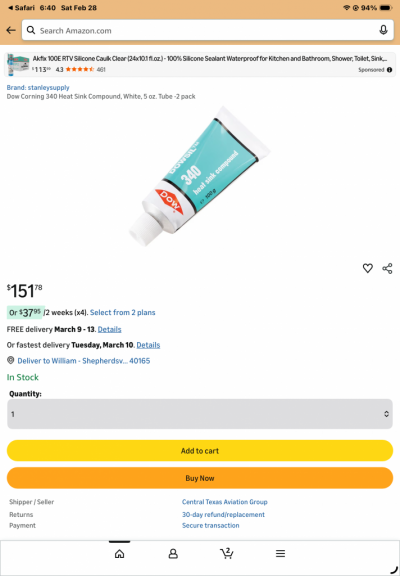
I've used this thermal paste in my electrical repairs for years, I consider it the best but there are a lot of others that are much cheaper.
It only takes a thin film.
 

Attachments

  • IMG_3370.png
    IMG_3370.png
    294.7 KB · Views: 42

ron350

Junior Member
Joined
Oct 30, 2025
Posts
17
Reaction score
44
Location
America
First Name
Ron
Truck Year
1975
Truck Model
C10
Engine Size
350
Last summer I went through 3 ignition modules before finally replaced the ignition coil.

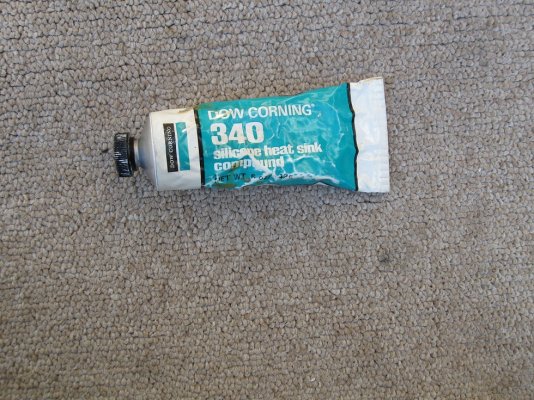
Old Guy Bill i have a tube of Dow Corning 340 heat sink compound that is about 30 years old and it is still good. You can tell from the picture I have not used much.
 

Attachments

  • IMG_0441.jpgA.jpg
    IMG_0441.jpgA.jpg
    433.9 KB · Views: 19

Dejure

Full Access Member
Joined
Mar 3, 2025
Posts
477
Reaction score
925
Location
Eastern Washington
First Name
Kelly
Truck Year
1978
Truck Model
C15
Engine Size
350
Years back, I had a car that went from a bazillion miles on a distributor cap and rotor to dying with just a few thousand miles on them. Years latter, the same happened with my cargo van. The solution was the same for both rigs.

Trouble shooting it, I did a lot of research. The thing that showed up, over and over again, was, the distributor was old and worn. More specifically, those little gears at the bottom went from square ends to knives. They, literally, were sharp enough to cut something.

For those unaware, the reason that was a problem is, that threw the point at which the system fired a plug off. A bit after when it should have.

Okay, there is that, but the details as to why this was shortening the life of the cap and rotor were, in all sites discussing it, lacking. Mainly because all but a few did not know the whys of the problem.

I pondered it a bit, then remembered I used to make my living playing with electrons for the federal government. In the course of getting there, I had to learn a little about electronics (components, etc.). One of those things was, coils hate change. They will fight it. To that end, they keep raising voltage to keep the circuit going. That is how coils and points, or point replacements, work. The voltage keeps climbing until it jumps the plug gap [and the system is designed so it will do it at the right time].

With that aforementioned distributor issue, the worn gears of the distributor caused the system to fire, say, 1/4" past the terminal, instead of where the system design would have had it fire, wrecking havoc inside the cap (e.g., burning, corrosion), where sparking should be kept as minimal as possible. The major sparking was the opposite of great for the life of the cap and rotor.

Then there is the matter of that additional gap inside the cap on top of the gap at the plugs meant the coil, doing what coils do, rose the voltage even higher than normal, until the spark could jump both gaps, or find another, shorter route to ground.

And the problem grows from there:

I had put new, high end wires on the rig, then ran it in the dark of the night, so see if I could detect arcing anywhere. I did. The whole set of wires went into corona mode. I was pissed, thinking NAPA was pawning cheap dielectric strength wires on the public. That was when I remembered that coil, volt climbing thing. What was happening was, a system designed for, say, 50k volts was suffering 70kv in operation. In other words, too much for even quality wires to insulate.

In the case of that cargo van, there was even corona around the coil.

With the new distributor dropped in, the corona went away, and caps and rotors went back to lasting 50k miles.

ON A SIDE NOTE OR TWO:

(1) Because there was corona around the coil of the van (different kind of coil than our square bodies), I just assumed it took a beating, so swapped it out too, rather than risk a short and being stranded on down the line.

(2) Those higher volts (in the thousands of volts) aren't nice to anything in the ignition circuit. There could even be internal arcing in the coil itself, which would be especially problematic for electronic coil [e.g., HEI] systems.

Years back, I looked at an electronics circuit that had been hit by a static discharge (one just made by rolling an office chair across a floor) under a microscope. Saying it fried the tiny circuit was an understatement. It looked like the Shaw of Iran HAD lived there.

 
Last edited:

Dejure

Full Access Member
Joined
Mar 3, 2025
Posts
477
Reaction score
925
Location
Eastern Washington
First Name
Kelly
Truck Year
1978
Truck Model
C15
Engine Size
350
You DO NOT USE DIELECTRIC GREASE!!!!! You use heat sink paste,get it from a computer store. Parts store have it too but most parts store guys are not that familiar with everything. Using dielectric grease will burn up modules premature,it doesn't allow proper heat transfer to the distributor to pull heat out of the module and the module slowly cooks itself.
"Most heat sink grease (thermal paste) is designed to be electrically non-conductive (insulating) to prevent short circuits, though it is highly thermally conductive. While standard ceramic/silicone pastes are safe, some high-performance metal-based or liquid metal compounds can be electrically conductive.
  • Non-Conductive (Safe): Silicone, ceramic, or carbon-based pastes are generally electrically insulating.
  • Conductive (Risky): Metal-based compounds, especially silver or liquid metal, can be electrically conductive, meaning accidental contact with components could short them out.
  • Best Practice: Always check the label. If it is "metal-based" or "liquid metal," assume it is conductive. If it is "ceramic" or "silicone," it is likely non-conductive.
Always apply thermal paste sparingly to ensure it stays only between the processor and the heat sink. "
 

Poodlehead

Member
Joined
Mar 23, 2023
Posts
37
Reaction score
34
Location
College Station, TX
First Name
Pat
Truck Year
1977
Truck Model
Silverado
Engine Size
350
My ignition modules on my 77 didn't last very long either. My truck always ran like it needed a tune-up.

I finally found my problem!

Some dummy (me) didn't transfer the short ground wire from the middle pin on the side terminal of the cap to the ground on the coil when I swapped out caps years ago.

I'm not sure if your setup is the same as my 77, but that missing ground wire made a world of difference. Good luck!
 

Snoots

Full Access Member
Joined
Jan 23, 2013
Posts
10,597
Reaction score
25,218
Location
Georgia
First Name
Roger
Truck Year
1973
Truck Model
Jimmy Sierra
Engine Size
350 w/203
Arctic Silver is a tad cheeper.
 

Forum statistics

Threads
48,418
Posts
1,067,003
Members
42,805
Latest member
NateP350
Top