
Fuel Smell

Disclaimer: Links on this page pointing to Amazon, eBay and other sites may include affiliate code. If you click them and make a purchase, we may earn a small commission.

Magna86

Full Access Member
Joined
Mar 1, 2021
Posts
155
Reaction score
323
Location
VA Beach
First Name
Magna86
Truck Year
1976
Truck Model
Silverado
Engine Size
Chevy 350
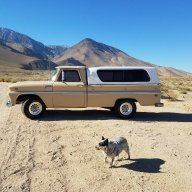
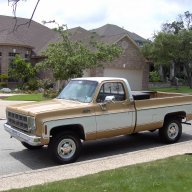
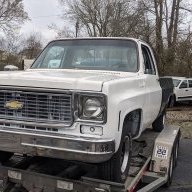
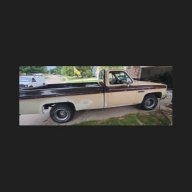
Alright need some ideas of where I'm getting a fuel smell from. When I come to a stop is when I get the strongest smell though I can smell it a bit while driving. I've found no signs of a leak. I've replaced all the rubber lines going to the tank and replaced both the filler neck and vent line. I've also dropped the tank to change my fuel sock on the sender and replaced the rubber seal. Thought I still had a possible tank leak but I've checked when stopping in my driveway and see no signs. Dont see any fuel pooling on the intake or leaks from the fuel pump. Exhaust runs all the way past rear bumper. What are your guys thoughts?
 

Magna86

Full Access Member
Joined
Mar 1, 2021
Posts
155
Reaction score
323
Location
VA Beach
First Name
Magna86
Truck Year
1976
Truck Model
Silverado
Engine Size
Chevy 350
Yes it still has a charcoal canister. Guess I'll check to see if its clogged/cracked/flooded and the lines are good.
 

TotalyHucked

Full Access Member
Joined
Feb 24, 2020
Posts
6,953
Reaction score
25,663
Location
Auburn, Georgia
First Name
Zach
Truck Year
1985
Truck Model
Sierra 1500
Engine Size
5.3
I'd bet the charcoal canister is full or you have a couple cracked/leaking lines from the carb to it
 

DoubleDingo

Full Access Member
Joined
Jul 3, 2012
Posts
13,906
Reaction score
23,758
Location
Right where I am
First Name
Bagoomba
Truck Year
1981
Truck Model
81-C20 Silverado Camper Special-TH400-4.10s
Engine Size
Carb'ed Vortec 350
Check the fuel pump while it's running. I had one fail with a leak that sprayed sideways. It ran fine but spit fuel out. Somehow it never caught fire as it sprayed right at the exhaust. Have you checked the carb inlet?
 

75gmck25

Full Access Member
Joined
Oct 13, 2016
Posts
2,756
Reaction score
3,047
Location
Northern Virginia
First Name
Bruce
Truck Year
1975
Truck Model
K25 Camper Special TH350 NP203
Engine Size
5.7
I had the same issue with a crack in my fuel pump spraying fuel sideways onto the exhaust manifold. It was a small amount, and evaporated very quickly, but still gave a strong fuel smell.

The original fuel rubber hoses also developed small cracks that were not visible until you bent the hose in a u-shape. Sometimes the cracks let fuel seep out, or even spray out under pressure.
 

goldpack

Full Access Member
Joined
Jul 8, 2025
Posts
535
Reaction score
1,056
Location
Adirondacks, NY
First Name
Donnie
Truck Year
1986
Truck Model
GMC C2500 Camper Spec.
Engine Size
350 with 350 3 speed
one of the problems with fuel leaks is the gasoline dissipates fast and leaves no or very little visible residue to actually see
I have had a jug like this on my shelf for 20 years...use very little vs. what the directions say. and such makes whatever is rusted, leaking or spraying glow with a UV or flashlight.

so really handy: defining what rubber thing is bad,...what rusted thing among many rusted things is "bad".
(got a nice pic somewhere of a gas filler line on a 2002 gmc,.. with a section of rusted steel all glowing as all the steel was infused with the dye,...which was pretty good vs. dropping the tank to find perfectly good smaller lines..and breaking good stuff to do it).

 
Last edited:

goldpack

Full Access Member
Joined
Jul 8, 2025
Posts
535
Reaction score
1,056
Location
Adirondacks, NY
First Name
Donnie
Truck Year
1986
Truck Model
GMC C2500 Camper Spec.
Engine Size
350 with 350 3 speed
and I just found one of those pics I took of the gas filler line's metal section on a gmc of 2002.
(orange pointer is a yard marker snow stake)
so the dye went through all that metal ... ...at the time like 5 years back the filler assembly whole was like $120 for a 5.3 type.

I don't think I have a good pic of where I have caught gas spraying dye under the hood,...but I remember the dye stays put....
I notice some lines leak when they are cold/ very cold in ambient air temp getting deformed / brittle,...others leak as they heat with engine temp and get soft and loose.
...and yeah. changed whole expensive assemblies, chasing gas leaks is sometimes the only thing....but nice when you can just swap the damaged piece for a few bucks. (and its easy to get at).

this pic is a from about 2020, of a 2002 yukon XL that has lived in upstate NY its whole life....(on rock salt / salted sand roads...still going next year a classic truck,.. had it almost 10 years,..but only put about 2000 miles on it a year,..8 feet of room behind the front seats, with heat for your tools / materials .)

edit: pic is big and slow to load/ link I guess.
You must be registered for see images attach


***

You must be registered for see images
 

Ricko1966

Full Access Member
Joined
Apr 11, 2017
Posts
9,952
Reaction score
19,094
Location
kansas
First Name
Rick
Truck Year
1975
Truck Model
c20
Engine Size
350
I had the same issue with a crack in my fuel pump spraying fuel sideways onto the exhaust manifold. It was a small amount, and evaporated very quickly, but still gave a strong fuel smell.

The original fuel rubber hoses also developed small cracks that were not visible until you bent the hose in a u-shape. Sometimes the cracks let fuel seep out, or even spray out under pressure.
My 66 Chevelle caught fire that way. A fuel hose,previous owner installed Edelbrock performer and used a piece of rubber fuel hose to mate carb to existing fuel line. A pin hole in the fuel line was squirting just like a squirt gun. I saw the fuel stream still coming out of the hose,spraying the distributor. I now run steel lines only,on the pressure side. Does anyone know of a factory built Chevrolet from the 60s on up that didn't use steel line from the fuel pump to carburetor? That's another thing that makes some fuel leaks hard to find sometimes,the are on the suction side,not under pressure so they don't leak until you shut the engine off and then they just seep out small amounts of fuel,so not a nice puddle like the pressure side.
 
Top