Wood-fired Square

Disclaimer: Links on this page pointing to Amazon, eBay and other sites may include affiliate code. If you click them and make a purchase, we may earn a small commission.

Steelbuddha

Full Access Member
Firefighter
Joined
Mar 16, 2024
Posts
132
Reaction score
200
Location
Central North Carolina
First Name
Jonathan
Truck Year
1984
Truck Model
K20 (dump bed)
Engine Size
350
Thought I'd share this video my buddy just sent over. He suggested that because I now have a log skidding winch for my tractor, a wood-fired Square should be my next project.
xc_hide_links_from_guests_guests_error_hide_media

Those Scandinavians like their wood. It seems like you'd never reach the point of ROI on a conversion like this, but it's kind of cool nonetheless.
 

Jrgunn5150

Questionable methods
Joined
Jan 11, 2016
Posts
3,126
Reaction score
2,643
Location
Ionia Mi
First Name
J.R.
Truck Year
1979
Truck Model
C10
Engine Size
6.slow
I've made a variety of gasifiers over the years, even had a Wheelhorse lawn tractor running around on one.

Fun projects, but very finicky and difficult to dial in.

If I won the lottery I don't play, using my professional skills with automation and robotics, I think you could really make a sophisticated unit.
 

Ricko1966

Full Access Member
Joined
Apr 11, 2017
Posts
9,940
Reaction score
19,066
Location
kansas
First Name
Rick
Truck Year
1975
Truck Model
c20
Engine Size
350
Mother earth news did the same thing,I read about it in the 80s,not sure if this is a reprint,but here's one take on it
 

Dejure

Full Access Member
Joined
Mar 3, 2025
Posts
477
Reaction score
924
Location
Eastern Washington
First Name
Kelly
Truck Year
1978
Truck Model
C15
Engine Size
350
Long before Mother Earth News was around, there was WWII. To the end of dealing with the limited fuel supplies, the feds had a fleet of gassifier powered rigs.

Now, engineers/ scientists devised systems that even burn the CO2, as fuel.

A stage down from burning CO2 is, the world of rocket stoves. They make the supposedly high tech stoves sold for big nickles look like amateur's toys.

A properly running rocket stove produces little discernible smoke. Many report they can sniff the output and barely tell anything is being burned.

Rocket stoves require a fraction of the fuel standard stoves do. In part, because the stacks reach temps of around 2,000 degrees, burning off fuel that would have gone up and out the chimney.

Fuel for rocket stoves can be leaves, chips and so on, because they do such a good job of using the BTU's burning such things completely can produce.

The efficiency of rocket stoves is, often, bumped up by that many take advantage of the heat produced with what, essentially, could be called a heat flywheel. Like less efficient Russian stoves did by way of mass, used to store, then dissipate heat. Many systems dissipate the heat in such a manner those using them can sit or sleep on the "flywheel."

Many gassifier systems use the decades old rocket stove tech to get the most out of fuel.

I have an 81 Twinkie Mobile (a Grumman step van) with 14' behind the driver. It's powered by a 300 six. I've, many times, thought of keeping it just because it could be converted to run off a gassifier, and carrying "gas" would be a non issue.

The only major concern is insuring the cab portion is well isolated from the carbon monoxide side of the power source. A very real consideration with rigs like this.

One thing about a system like this is, it could be used as an alternative heat and power generating source.

SIDE NOTE 1: The entire body of the Grumman is aluminum. Because of that, it weighs about the same as a crew-cab.
 
Last edited:

Jrgunn5150

Questionable methods
Joined
Jan 11, 2016
Posts
3,126
Reaction score
2,643
Location
Ionia Mi
First Name
J.R.
Truck Year
1979
Truck Model
C10
Engine Size
6.slow
It's simpler than people think, to start, and harder than people think, to make work in a vehicle.

Heating any carbon source in the absence of oxygen causes the hydrogen molecules to peel off, you can see this happening in a campfire, if you know what to look for. A log will have smoke rolling out from a crack in it, and that smoke will periodically catch fire.

This is the simplest type of gasifier, the trick is cooling the gas, filtering the tar, capturing the water... It's easiest to run them on charcoal because of all that.

BTW, any gas engine will run on wood gas, can be EFI, I've run an LS on it.

You must be registered for see images attach
 

YakkoWarner

Full Access Member
Joined
May 29, 2024
Posts
643
Reaction score
1,049
Location
Central Texas
First Name
Wolf
Truck Year
1989
Truck Model
R2500 Suburban
Engine Size
454
Long before Mother Earth News was around, there was WWII. To the end of dealing with the limited fuel supplies, the feds had a fleet of gassifier powered rigs.

Now, engineers/ scientists devised systems that even burn the CO2, as fuel.

A stage down from burning CO2 is, the world of rocket stoves. They make the supposedly high tech stoves sold for big nickles look like amateur's toys.

A properly running rocket stove produces little discernible smoke. Many report they can sniff the output and barely tell anything is being burned.

Rocket stoves require a fraction of the fuel standard stoves do. In part, because the stacks reach temps of around 2,000 degrees, burning off fuel that would have gone up and out the chimney.

Fuel for rocket stoves can be leaves, chips and so on, because they do such a good job of using the BTU's burning such things completely can produce.

The efficiency of rocket stoves is, often, bumped up by that many take advantage of the heat produced with what, essentially, could be called a heat flywheel. Like less efficient Russian stoves did by way of mass, used to store, then dissipate heat. Many systems dissipate the heat in such a manner those using them can sit or sleep on the "flywheel."

Many gassifier systems use the decades old rocket stove tech to get the most out of fuel.

I have an 81 Twinkie Mobile (a Grumman step van) with 14' behind the driver. It's powered by a 300 six. I've, many times, thought of keeping it just because it could be converted to run off a gassifier, and carrying "gas" would be a non issue.

The only major concern is insuring the cab portion is well isolated from the carbon monoxide side of the power source. A very real consideration with rigs like this.

One thing about a system like this is, it could be used as an alternative heat and power generating source.

SIDE NOTE 1: The entire body of the Grumman is aluminum. Because of that, it weighs about the same as a crew-cab.

The ide of the rocket stove burning hot enough to recombust the CO (carbon monoxide) into CO2 (carbon dioxide) is similar to the Aladdin mantle lamps from the 1910s forward. They burn kerosene but at a temperature hot enough that you'll never smell it, and burn complete enough to generate CO2 instead of the more dangerous CO. Also make good space heaters while emitting gas-lamp intensity white light from an unpressurized kerosene wick burner.
 

Dejure

Full Access Member
Joined
Mar 3, 2025
Posts
477
Reaction score
924
Location
Eastern Washington
First Name
Kelly
Truck Year
1978
Truck Model
C15
Engine Size
350
A.I. is so dependable - NOT.

On a whim, I ran a search for "did the U.S. government have a fleet of gassifier vehicles. It responded "No."

Knowing I read many articles about gassifiers and a few talked about the feds experimentation with such, I ran a couple more searches, basically, calling BS on the A.I.

Eventually, it admitted the feds, via FEMA, wrote a manual on it. Aside that FEMA was formed in 79, "a couple days" after WWII, info started drifting back that was more consistent with articles from decades back.

"Gasifiers were very much a pre-1950s technology, and by the 1950s they had already gone through more than a century of experimentation and industrial use. Early work focused on making “town gas” or producer gas from coal, wood, and coke for lighting, heating, and later engines.

Early roots​

The basic idea goes back to the late 1700s and early 1800s, when heating coal without enough air produced a usable gas. William Murdoch’s coal-gas work in the 1790s helped launch practical gas lighting, and by the 1830s–1850s gas production had become a commercial industry.

1800s to early 1900s​

By the mid-1800s, gasifiers were being used for manufactured gas systems and industrial fuel. Siemens’ commercial wood gasifier in 1861 and later producer-gas systems helped extend the idea beyond lighting into broader industrial use, and by around 1881 producer gas was being used to run internal combustion engines.

1930s and 1940s​

The 1930s and 1940s were a peak period for practical experimentation, especially with vehicle gasifiers. Wood-gas systems were used as a substitute motor fuel, and gasification research also fed into synthetic fuel work during and after World War II.

Around the 1950s​

By the early 1950s, researchers were shifting toward higher-pressure coal gasification and cleaner gas production. The U.S. Bureau of Mines had already built a pilot gasifier in 1948, and by the early 1950s it was focusing on more advanced pressurized techniques at the new Appalachian Experiment Station.

What they were trying to solve​

Those experiments were mainly about:
  • Turning cheap solid fuels into cleaner, usable gas.
  • Making engines and furnaces run on coal or wood instead of petroleum.
  • Producing synthetic fuels and chemicals from coal gas.
If you want, I can also give you a timeline of gasifier development or a plain-English explanation of how wood gas generators worked in wartime vehicles.
 

Dejure

Full Access Member
Joined
Mar 3, 2025
Posts
477
Reaction score
924
Location
Eastern Washington
First Name
Kelly
Truck Year
1978
Truck Model
C15
Engine Size
350
There is so much info that seems lost to other than a few, but which is gold in many situations. It's like the world of wood work. Sometimes, old technology is better, or the only solution.

One example of old school being a solution is, my wood fence. Years down the road, it looks far better than others around the area, because they relied on surface coats, and I just thin used oil and try to saturate it by adding as much as it will take. Because the oil replaces lost moisture, the wood is less prone to shrinkage, which results in splitting and cracking. And, the oil brings even gray, sun beaten wood back to a nice appearance.

Then there are people like my friend who, pretty much, believes if it didn't come from Safeway, it isn't safe. That includes buying sides of beef, doing your own food storage. . . .
 

Fat 454

Full Access Member
Joined
Jul 24, 2012
Posts
382
Reaction score
605
Location
Australia
First Name
Andy
Truck Year
1973
Truck Model
C20 Suburban
Engine Size
454
One example of old school being a solution is, my wood fence. Years down the road, it looks far better than others around the area, because they relied on surface coats, and I just thin used oil and try to saturate it by adding as much as it will take. Because the oil replaces lost moisture, the wood is less prone to shrinkage, which results in splitting and cracking. And, the oil brings even gray, sun beaten wood back to a nice appearance.
what "kind" of oil - engine oil, cooking oil ? Thanks - interested in better ways to make my fences live in a wet / coastal environment?..
 

Dejure

Full Access Member
Joined
Mar 3, 2025
Posts
477
Reaction score
924
Location
Eastern Washington
First Name
Kelly
Truck Year
1978
Truck Model
C15
Engine Size
350
Fat 454, engine oil, automatic transmission fluid, mineral oil, Chevron Shingle Oil. . . . Any non-hardening oil will do. Avoid hardening oils, like Tung oil, boiled linseed oils and other surface coats.

I thin about 15% paint thinner to improve penetration of the wood, but you could just put the straight, unthinned oil and walk away. it would still soak in. It would just take longer to do it.

You can apply the oil with a brush, roller, pump-up garden sprayer (you'd have to do that 15% thin to move it through the sprayer) or an airless.

With a garden sprayer, I can do about a 100' fence in about an hour.

When I get to the end of a run (your choice as to how long that run is), I go back and add wherever the oil soaked in (knots take the oil quickly).

For my current short cedar fence (only about 50' tied to cyclone), I use a roller and work straight out of a 5 gallon bucket. Just like when commercially painting, I dip the roller in the oil, then spin it by dragging against the insides of the bucket, as I pull it out. This wets the roller and reduces drips (but it will still drip).

Note that the more oil you get in the wood, the better results you get, of protecting the wood, and replacing moisture. When the oil replaces lost moisture, it swells the wood up, even taking it back to where it was when it was installed.

For example, I treated a butcher block cart with many obvious cracks, splits and glue joint separations with mineral oil. I kept working on it throughout the day by leaving oil at the project and adding where is soaked in each time I walked by, working on other projects. At the end of the day, I slathered a lot of oil on and walked away. I got sidetracked with other projects. A few weeks, when I checked on the butcher block, all the cracks and splits APPEARED to have disappeared, because of that swelling.

I nice, older lady (I'm probably as old as her, now, and she's, probably, gone) used to have me take care of her fence. I shared all this info with her, so she could get a high school kid to do the work, if she wanted. Her fence looked relatively new, though all the homes around here in the division had cracked, tired, gray fences.

How much oil you use on an application depends on where you're at in treating your shingles, shakes or fence. The more oil you apply, after previous applications soak in, the quicker the next application goes, if you are coming back to spots that soaked in quickly.

One nice thing about oil is, you don't have to strip a finish. You just go right over the previous application(s). If, like my fence, it's covered in dirt (dog games), I rinse it off with a nozzle on stream, let it dry for a few days, then apply the new applications.

When I did a cedar wall on a house on the coast, the first applications seemed to disappear in a couple months of what passed for summer there. The second coat seemed to do only a bit better. However, the third coat made that the cedar had been treated obvious five years down the road. That's because the oil applications are cumulative. Rather than evaporating, the oil wicks deeper into the wood, to dry parts. By the time THAT third coat was on, the project was enough toward total saturation (would have taken religious applications over several years, but, down the road, the wood would be nearly bullet proof and only need the occasional applications.

IF YOU USE A SPRAYER, wear a respirator. The oil will mist. It will mist a lot. You don't need that in you.

 

Fat 454

Full Access Member
Joined
Jul 24, 2012
Posts
382
Reaction score
605
Location
Australia
First Name
Andy
Truck Year
1973
Truck Model
C20 Suburban
Engine Size
454
Wow - that sounds amazing - not least now I may have a use for all the fleet used engine oil we produce on the property. Will save disposal and save the fencing too. Will try it out ASAP - thanks.( sounds like roller is the way to go ).
I'm putting in wind break fence around the bosses veggie patch - no issue with contamination ? - thinking if I can use it on timber borders too ? - or better to stay away from that ( they will be partially in the ground also, unlike the fence slats, so will rot over time I guess. We have a good natural cedar locally )

On the alternative fuel front ( as we never digress ) - 'parently the GOV is spending $25M of our money to get one of our 2 remaining refineries to make biodiesel out of pigfat .. mmm your truck never smelled so goood !..
 

Dejure

Full Access Member
Joined
Mar 3, 2025
Posts
477
Reaction score
924
Location
Eastern Washington
First Name
Kelly
Truck Year
1978
Truck Model
C15
Engine Size
350
There, probably, is going to be run off from rain and snow. How much, I don't know. Of course, every situation is going to vary. Some of that is going to contain heavy metals.

If it's a large enough garden, my money is on that any contamination that occurs would be limited to the perimeter, where the fencing is.

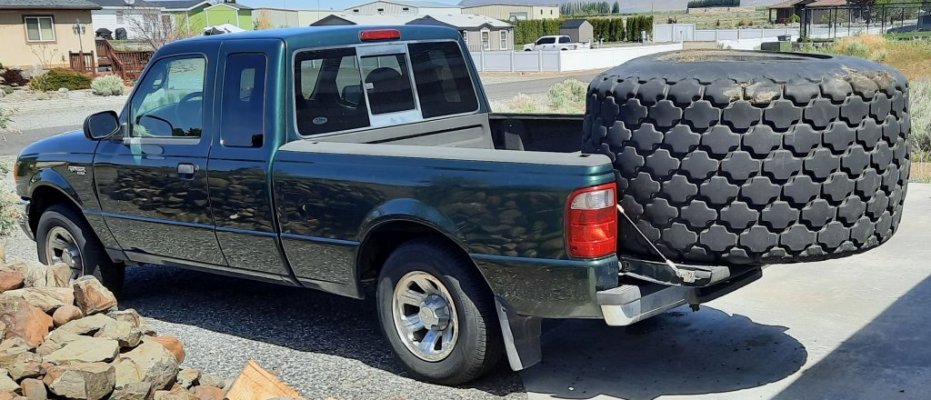
To minimize the potential for contamination, and aside that many don't like the idea of food grown in tires, I'd consider doing what I do as much as possible anyway - grow in truck, tractor and combine tires. In your case, at least around the perimeter (it's addictive, not having to bend over to tend the bottom of maters, or for harvesting).
 

Attachments

  • Combine Tire-1.jpg
    Combine Tire-1.jpg
    133.9 KB · Views: 22

YakkoWarner

Full Access Member
Joined
May 29, 2024
Posts
643
Reaction score
1,049
Location
Central Texas
First Name
Wolf
Truck Year
1989
Truck Model
R2500 Suburban
Engine Size
454
Fat 454, engine oil, automatic transmission fluid, mineral oil, Chevron Shingle Oil. . . . Any non-hardening oil will do. Avoid hardening oils, like Tung oil, boiled linseed oils and other surface coats.

I thin about 15% paint thinner to improve penetration of the wood, but you could just put the straight, unthinned oil and walk away. it would still soak in. It would just take longer to do it.

You can apply the oil with a brush, roller, pump-up garden sprayer (you'd have to do that 15% thin to move it through the sprayer) or an airless.

With a garden sprayer, I can do about a 100' fence in about an hour.

When I get to the end of a run (your choice as to how long that run is), I go back and add wherever the oil soaked in (knots take the oil quickly).

For my current short cedar fence (only about 50' tied to cyclone), I use a roller and work straight out of a 5 gallon bucket. Just like when commercially painting, I dip the roller in the oil, then spin it by dragging against the insides of the bucket, as I pull it out. This wets the roller and reduces drips (but it will still drip).

Note that the more oil you get in the wood, the better results you get, of protecting the wood, and replacing moisture. When the oil replaces lost moisture, it swells the wood up, even taking it back to where it was when it was installed.

For example, I treated a butcher block cart with many obvious cracks, splits and glue joint separations with mineral oil. I kept working on it throughout the day by leaving oil at the project and adding where is soaked in each time I walked by, working on other projects. At the end of the day, I slathered a lot of oil on and walked away. I got sidetracked with other projects. A few weeks, when I checked on the butcher block, all the cracks and splits APPEARED to have disappeared, because of that swelling.

I nice, older lady (I'm probably as old as her, now, and she's, probably, gone) used to have me take care of her fence. I shared all this info with her, so she could get a high school kid to do the work, if she wanted. Her fence looked relatively new, though all the homes around here in the division had cracked, tired, gray fences.

How much oil you use on an application depends on where you're at in treating your shingles, shakes or fence. The more oil you apply, after previous applications soak in, the quicker the next application goes, if you are coming back to spots that soaked in quickly.

One nice thing about oil is, you don't have to strip a finish. You just go right over the previous application(s). If, like my fence, it's covered in dirt (dog games), I rinse it off with a nozzle on stream, let it dry for a few days, then apply the new applications.

When I did a cedar wall on a house on the coast, the first applications seemed to disappear in a couple months of what passed for summer there. The second coat seemed to do only a bit better. However, the third coat made that the cedar had been treated obvious five years down the road. That's because the oil applications are cumulative. Rather than evaporating, the oil wicks deeper into the wood, to dry parts. By the time THAT third coat was on, the project was enough toward total saturation (would have taken religious applications over several years, but, down the road, the wood would be nearly bullet proof and only need the occasional applications.

IF YOU USE A SPRAYER, wear a respirator. The oil will mist. It will mist a lot. You don't need that in you.


One thing that might concern me about using the oil on a inhabited structure is the possibility that the oil makes it more likely to catch fire? Or once it soaks in does it not have as much flamability?
 

Dejure

Full Access Member
Joined
Mar 3, 2025
Posts
477
Reaction score
924
Location
Eastern Washington
First Name
Kelly
Truck Year
1978
Truck Model
C15
Engine Size
350
That's the same concern my buddy, who owned and operated cedar mills expressed. I reminded him of how much effort he put into starting up the burners at his mill - he'd dump five gallons of diesel on the cedar in the burner, then have to use a handheld propane torch to get it going. Using matches or a lighter took several minutes and he went through a lot of matches.

To be clear, mill cedar is damp, so he was, essentially, trying to light the diesel, which is easier to light than motor oil.

On the other hand, VERY dry cedar, especially if thin pieces of cedar (people would be amazed at how the elements can eat away at shakes and shingles) will light from a match pretty quickly.

In the end, it's about the same problem, though once the oil got going, it would be all over and the fat lady couldn't even sing anymore. But it wouldn't go well if embers from a chimney landed on dry cedar roofing. It might even start easier.

If one was in doubt, he could make some shavings, dry them overnight, then douse some with oil and leave others plain, then see which starts quicker. It would be interesting to see.


One thing that might concern me about using the oil on a inhabited structure is the possibility that the oil makes it more likely to catch fire? Or once it soaks in does it not have as much flamability?
 

Forum statistics

Threads
48,401
Posts
1,066,542
Members
42,778
Latest member
Skippy
Top